Work/MVP Exotics
Live
MVP Exotics
MVP Exotics is the online concierge for MVP Miami, an exotic and luxury car rental company. We designed and built the website so that every search a renter makes, in a search engine or an AI assistant, lands on a page written to answer it.
- Sector
- Exotic and luxury car rental
- Type
- Marketing and reservation website
- Our role
- Strategy, SEO and AEO, design, writing, build
- Size
- 45 pages, each with one job
The brief
A showroom's service, found first.
Someone landing in Miami and searching for a Lamborghini or a Rolls-Royce decides within a minute. They want to see the actual car, know the daily rate, and be sure it can be at their hotel or terminal when they arrive.
Most rental sites in the trade hide the price behind a form, show stock photographs and put the whole fleet on one long page. Search engines have little to rank, and AI assistants have nothing exact to quote.
The brief was the reverse: real cars, real rates, clear terms, one page for every way a renter searches, and a request that takes a minute and charges nothing.
Search structure
One page for every way a renter searches.
People don't search for "exotic cars". They search for a marque, a model, a place or a weekend. Each of those has its own page, with its own address, title and answer.
| Page family | The search it answers | Example address |
|---|---|---|
| By marque | "Lamborghini rental Miami". Every car of that make, with a short guide to choosing between them. | /lamborghini-rental-miami/ |
| By model | "Rolls-Royce Cullinan rental Miami". 19 model pages, each listing the individual cars, colors and rates. | /rolls-royce-cullinan-rental-miami/ |
| By body style | "Convertible rental Miami". Every open-top car across all marques on one page. | /convertible-rental-miami/ |
| By location | Miami Beach and South Beach, Fort Lauderdale, and the three airports, each with delivery times and suitable cars. | /miami-beach-exotic-car-rental/ |
| By occasion | Art Basel, the Formula 1 Miami Grand Prix and weddings, with dates, minimums and the cars people book for them. | /art-basel-car-rental-miami/ |
| Guides | Questions asked before booking: cost, requirements, insurance and deposits, which car, and one model against another. | /guides/exotic-car-rental-cost-miami/ |
| Answers | A full FAQ in plain English, plus four to six questions on every page above. | /faq/ |
Addresses are written in the words people type. Each page links to its neighbors, so a visitor on a model page is one click from the marque, the delivery areas and the cars to consider instead.
Titles, headings and descriptions
Descriptive, and written to prompt a click.
The title and description are the only part of a page most searchers ever read. We wrote each one by hand to a pattern.
www.mvpexotics.com › rolls-royce-cullinan-rental-miami
Rolls-Royce Cullinan Rental Miami | From $1,075/day
Rent a Rolls-Royce Cullinan in Miami from $1,075/day: V12, coach doors and room for four. Delivered to your hotel, villa, MIA or private terminal.
www.mvpexotics.com › guides › exotic-car-rental-cost-miami
How Much Does It Cost to Rent an Exotic Car in Miami?
Exotic car rental in Miami costs $400 to $1,550 a day at MVP, before tax, mileage and delivery. Every model's daily rate, the deposit and the extras.
Two results as the site publishes them. Rates shown are those listed in November 2026.
- Title
- The exact phrase searched, then the reason to click: the car, the city and the starting rate.
- Description
- Opens with a verb ("Rent a…"), names what makes the car worth it, and ends with delivery to the door.
- One H1 per page
- States the subject in full, such as "Rolls-Royce Cullinan rental in Miami". Guides use the question itself as the H1.
- First paragraph
- Answers the search in two sentences: the starting rate, how many cars, what's included and where it can be delivered.
Answer engine optimization
Built to be quoted by AI assistants.
A growing share of renters ask ChatGPT, Claude, Perplexity or Google's AI overview before they open a website. Those systems quote sources that are exact, structured and current.
Answers first
Every page opens with a direct, self-contained answer an assistant can lift whole, before any selling.
Questions as headings
Visible FAQs on every page, phrased the way people ask, and matched one-to-one in the page's data.
Structured data
Each page describes itself to machines: the rental business, the car as a product with its rate, breadcrumbs, lists, articles and FAQs.
A file written for AI
An llms.txt gives assistants the key facts in one place: rates, deposit, minimum age, miles, hours and a link to every car.
AI crawlers welcomed
The site names the major AI search crawlers and invites them in, while keeping private routes closed.
Dated facts
Rates and guides carry the date they were last checked, so an assistant can tell the figure is current.
Continuity
Relevance carried forward, not reset.
A redesign can erase years of search standing overnight. The new structure was planned around the subjects the business was already known for, so each of them, from a marque to a delivery area, has a clear and stronger home in the new site.
The same idea holds from page to page. Each one passes its context to the next: breadcrumbs back to the marque and the collection, an "Also consider" set of comparable cars, and footer links to every marque, popular model, delivery area and guide. Nothing is more than two clicks from anything related to it.
Each page also declares its one true address, so search engines never split its standing across duplicates.
3D interactive vehicles
Turn the car yourself.
The leading models can be rotated through a full circle on the page. Try it here with the white Rolls-Royce Cullinan from the live site.
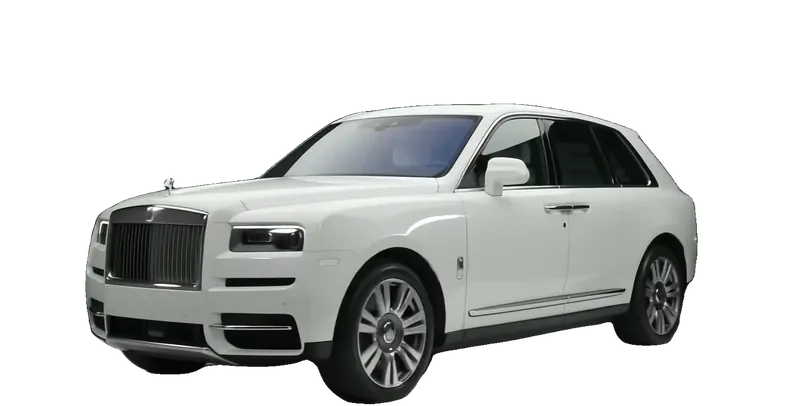
72 frames, turned by a drag, a swipe or the arrow keys. From the Cullinan page on mvpexotics.com.
Why it matters
A renter choosing between two cars at this price wants to see the whole shape. A spin shows what a still cannot: the proportions from every side.
Light on the page
Frames are small modern-format images. The page shows the first at once, so the viewer never slows the first paint.
Usable by everyone
It works by touch, mouse and keyboard, and is described in words for screen readers.
Photography
Every car, properly photographed.
No stock images. Cars are photographed in dedicated shoots covering the exterior, the details and the cabin, so the car in the photograph is the car that arrives.


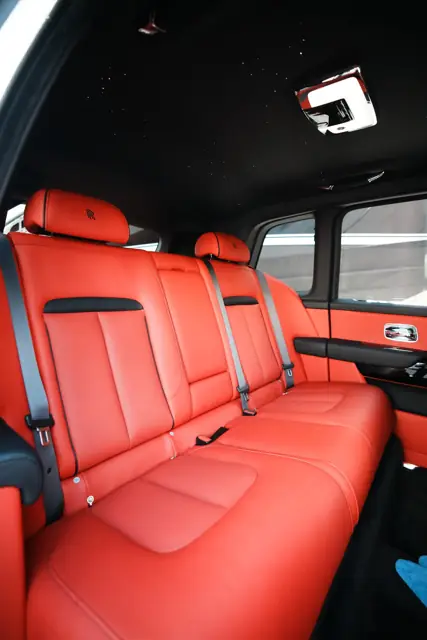
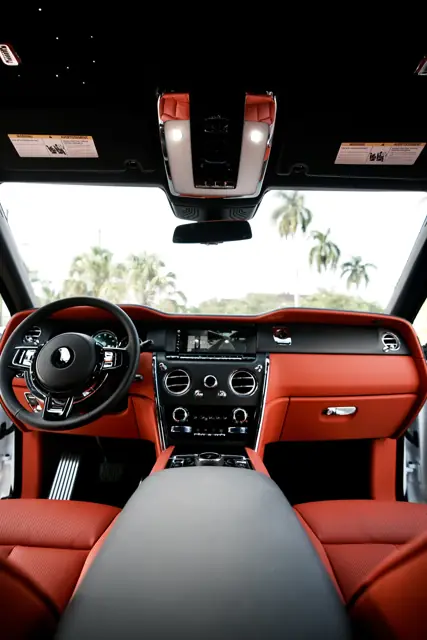
Four of the thirteen photographs on the Satin White Cullinan's page.
- The actual car
- A gallery shows one specific car, not a generic model, so a renter sees the exact color and interior on offer.
- Cut-outs on black
- Collection and marque pages show each car isolated on the site's black background: everything else in black and white, the car in color.
- Described for search
- Every image carries a description with the year, model and color, which is what image search and assistants read.
- Sized for the screen
- Images are served in a modern format at the size the device needs, so a phone on hotel wifi isn't sent a desktop file.
From search to request
Then make asking effortless.
- Request your dates
- Pick-up, return, delivery place and car in one short form. Nothing is charged; the concierge confirms the total by text or WhatsApp.
- Prices in the open
- Daily rates, deposits, included miles and the minimum age are stated on the page, so the inquiries that arrive are serious.
- Delivery made concrete
- Hotels, residences, both airports and the private terminal, each with a typical delivery time.
- A person at the end
- Every route ends with a phone number, a WhatsApp link and stated hours, never a dead-end form.
- Proof beside the ask
- The Google rating and renters' own words sit next to the request, where the decision is made.
Connected to the business
Every request lands in the CRM, by itself.
The website is not a separate island with an inbox someone has to check. Each reservation request flows straight into Talara, the system the team already works in, and that arrival starts the engagement. No lead waits to be noticed, so none is lost.
Request on the site
The renter sends their dates, the car they want and where it should be delivered.
Lead in Lead Engagement
The request appears at once in Talara Lead Engagement as a new lead from the website, which opens the conversation with the renter.
Deal in the CRM
A seller picks it up in Talara CRM with the car, dates and delivery place already filled in, checks availability and quotes.
Booking to handover
The same record carries on through the deposit, the agreement, check-out and return.
- Nothing re-typed
- What the renter entered on the website is what the seller sees. No one copies details out of an email into another system.
- No lead lost
- A request can't sit unread in a shared mailbox overnight. It joins the same queue as every call and message, with an owner and a status.
- The source is known
- Because each lead records where it came from, the business can see how much of its revenue the website brings in, down to the deal.
- One history per client
- A returning renter is matched to their existing record, so the seller sees past rentals before replying.
Talara is the platform we build for luxury car and villa rental businesses. Read about Talara.
In luxury rental, the website is the first handover.
The client forms a view of the business before anyone speaks to them. A site that is exact about cars, rates and terms tells them the rental itself will be handled the same way.
This is the sector we know best. We build the software these businesses run on, and the storefront their clients meet first.